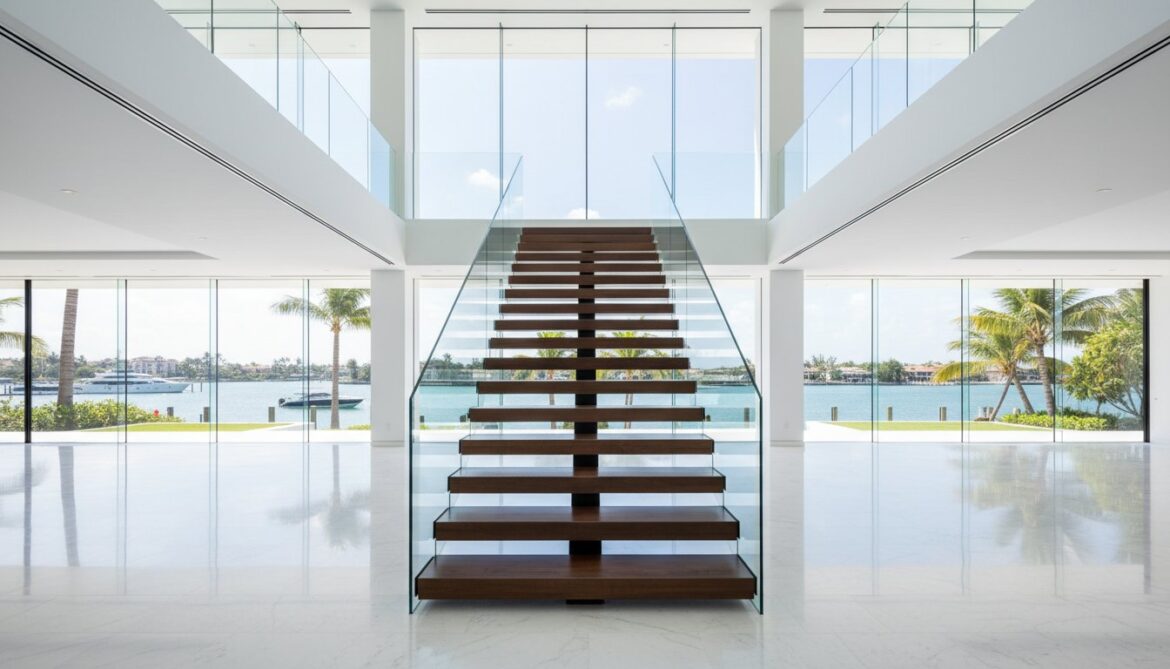
Luxury Glass Railings in Miami & Orlando: The Architectural Guide to Invisible Elegance
Article by
Linerep Solutions
What if the most profound architectural statement in your home was the one you could barely see? You've likely invested in a property for its panoramic coastal views or soaring open-concept interiors, yet traditional balustrades often act as a visual cage. It's a compromise that high-end design shouldn't have to make. By integrating luxury glass railings, you don't just secure a balcony or staircase; you eliminate the boundary between your living space and the horizon.
Achieving this level of invisible elegance requires a deep mastery of the 9th Edition of the Florida Building Code, which takes effect on December 31, 2026. This update mandates a strict "Safety Factor of 4" for glass guards, requiring panels to withstand four times their design load. This guide explores how bespoke engineering allows for frameless, minimalist designs that meet these rigorous 160 mph wind load requirements. We'll preview the technical precision needed for HVHZ compliance and show you how to achieve a flawless installation that exceeds local safety standards. Your home should be a safe, compliant sanctuary that never sacrifices its aesthetic vision.
Key Takeaways
Understand how frameless systems eliminate visual barriers to create seamless, open-concept transitions in high-end Florida estates.
Learn the technical distinction between standard tempered panels and structural laminated glass featuring SGP interlayers for superior structural integrity.
Discover how luxury glass railings are precision-engineered to exceed rigorous Miami-Dade impact standards while maintaining a minimalist aesthetic.
Identify why 316-grade stainless steel and high-performance hardware are essential for maintaining architectural permanence in corrosive coastal environments.
Explore the bespoke journey from 3D visualization to precision on-site assembly, where the absence of templates ensures a flawless, one-of-a-kind result.
Table of Contents
The Aesthetic of Transparency: Why Luxury Glass Railings Define Florida Modernism
Structural Integrity vs. Standard Hardware: The Engineering of Invisible Support
Navigating Florida Building Codes and Coastal Conditions for Glass Systems
Defining the Vision: Custom Fabrication and Professional Installation in Tampa & Fort Lauderdale
The Aesthetic of Transparency: Why Luxury Glass Railings Define Florida Modernism
In the most exclusive enclaves of Miami and Orlando, modern architecture demands a total rejection of boundaries. Luxury glass railings are not merely safety barriers; they are precision-engineered structural systems. Unlike the bulky, post-heavy balustrades found in mid-market homes, these systems utilize high-performance Architectural Glass to provide security without visual noise. By employing premium laminated tempered glass, we create a transparent shield that preserves the purity of an open-concept floor plan. It's a design strategy that prioritizes the architectural volume of the estate over the hardware that supports it.
To better understand the impact and installation of these systems, watch this helpful video:
The psychological impact of unobstructed light flow is profound. When natural light moves freely through a residence, the space achieves a literal and metaphorical sense of elevation. This is the cornerstone of Florida modernism. Traditional railings fragment a room and create visual clutter. Bespoke glass systems allow the eye to travel through the structure directly to the coastal or urban horizon. For the high-end homeowner, this transparency transforms a physical space into a sanctuary. No shortcuts. No templates. Just flawless execution.
Frameless vs. Minimalist Post Systems
The hardware selection dictates the system's visual weight and character. Base shoe systems offer a clean, monolithic profile by anchoring the glass directly into the subfloor. Conversely, standoff pin designs utilize precision-machined stainless steel to create a floating effect. To ensure the glass remains truly invisible, we specify low-iron compositions. Standard glass carries a distinct green tint. Low-iron glass eliminates this impurity, providing a neutral, crystal-clear view. This is where engineering meets art. Precision where form meets function.
Structural Integrity vs. Standard Hardware: The Engineering of Invisible Support
In the world of high-end residential design, safety shouldn't look like a compromise. While standard tempered glass is common in mid-market projects, luxury glass railings demand structural laminated glass. We utilize SGP (SentryGlas Plus) ionoplast interlayers that are 100 times stiffer and five times stronger than traditional PVB materials. This engineering ensures that if a panel breaks, the interlayer maintains the system's rigidity and upright position. It's an essential component for meeting the rigorous demands of the Florida Building Code without adding bulky frames.
When these systems are paired with luxury floating stairs, the glass does more than protect; it acts as a structural stabilizer for the cantilevered treads. Point-supported glass is a precision-engineered method that utilizes high-grade stainless steel standoffs to secure panels directly to the stair stringer or floor slab. This method eliminates the need for a bottom track, allowing the glass to appear as if it's hovering in place. It's a disciplined approach to minimalism where every fastener is a calculated architectural choice.
Deflection control is the invisible metric of quality. A railing that flexes or wobbles under pressure immediately loses its sense of permanence. By managing structural tolerances and load distribution, we achieve a rigid, immovable feel that instills absolute trust in the user. This level of stability is what separates a custom architectural system from a kit-of-parts installation. If you're planning a project that requires this level of detail, you can speak with a staircase specialist to discuss your specific vision.
The Role of Precision Fabrication
Luxury finishes depend on what happens before the glass arrives on-site. CNC-drilled holes are mandatory to prevent micro-fractures that occur with manual drilling. We insist on flat-polished edges and mitered corners to ensure that every transition is seamless. There are no templates and no shortcuts; each panel is fabricated to the exact millimetric requirements of your home's unique geometry.
Mono-Beam Synergy
There's a powerful aesthetic tension in bespoke mono-beam staircase design when integrated with luxury glass railings. The robust, industrial spine of the steel beam provides a grounded foundation for the weightless transparency of the glass balustrade. This combination creates a statement piece that defines the architectural volume of a high-value home while maintaining an open, airy atmosphere. The surface treatment of that steel spine is equally critical; selecting the right architectural metal finishes ensures the hardware complements the glass rather than competing with it.

Navigating Florida Building Codes and Coastal Conditions for Glass Systems
Designing for the Florida coastline requires a disciplined understanding of environmental stressors. In High-Velocity Hurricane Zones (HVHZ), such as Miami-Dade and Broward counties, luxury glass railings must undergo rigorous structural analysis to ensure they withstand extreme wind pressures. This isn't just about meeting a minimum requirement. It's about ensuring the architectural integrity of your home remains flawless during a storm. Every component must be engineered to code to provide both safety and permanence.
For estates in Tampa and Fort Lauderdale, the salt-laden atmosphere is a constant threat to metal components. We exclusively specify 316-grade stainless steel for all hardware exposed to the elements. Unlike the 304-grade steel often used in inland projects, 316-grade contains molybdenum. This specific element provides the corrosion resistance necessary for coastal permanence. It ensures your investment doesn't succumb to pitting or tea-staining within months of installation. Understanding the full spectrum of architectural metal finishes and their performance characteristics in salt-air environments is essential to making the right material selection for every exposed component. Precision where form meets function is our baseline for every coastal project.
Safety in high-traffic family areas is paramount. Laminated glass is the only solution that effectively prevents "shatter-gap" issues. If a panel is impacted, the interlayer holds the fragments together, maintaining a solid barrier until the panel can be replaced. This is a critical safety feature for homes with children or pets. It provides peace of mind without sacrificing the minimalist vision of your space. To ensure your project meets these exacting standards, you should discuss your project with an engineering-focused partner.
Safety Standards in Orlando and Miami
The Florida Building Code mandates that residential handrails and guards must withstand a 200lb concentrated load applied in any direction at the top rail. In Orlando's luxury developments, this requirement is strictly enforced to ensure user safety on elevated surfaces. We exceed these standards by utilizing thicker glass profiles and reinforced mounting systems that provide a rock-solid feel. There are no templates and no shortcuts when it comes to the safety of your sanctuary.
Coastal Renovations
The transition from traditional wood balustrades to luxury glass railings is a hallmark of modern coastal renovations. Replacing heavy, dated spindles with transparent systems immediately maximizes property value by reclaiming the view. It's an essential upgrade for any high-value home looking to achieve a contemporary, open-concept aesthetic. This elevation in design transforms a functional element into a definitive architectural statement.
Defining the Vision: Custom Fabrication and Professional Installation in Tampa & Fort Lauderdale
The transition from a conceptual drawing to a physical masterpiece requires a disciplined, end-to-end process. At Marbella Stairs, the journey begins with a meticulous 3D visualization that acts as a structural roadmap for your home. This digital precision ensures that every component of your luxury glass railings is accounted for before a single panel is cut. In Tampa and Fort Lauderdale, where architectural standards are uncompromising, we treat each installation as a unique engineering challenge. It's a move from high-level inspiration to granular, flawless execution.
"No templates" is our core signature. While many contractors rely on pre-sized panels that force the architecture to adapt to the hardware, we do the opposite. Each glass panel is custom-fabricated to the exact millimetric geometry of your space. This bespoke approach ensures a seamless fit where the glass meets the floor, wall, or tread. It's a commitment to uniqueness and integrity that defines a true luxury product. There are no shortcuts in the creation of a high-end sanctuary.
The integration of luxury staircase materials like white oak, walnut, or honed stone creates a sophisticated material dialogue within the home. Glass provides the transparency and light flow, while organic materials provide the necessary weight and texture. This creates a statement piece that feels integrated into the home's DNA rather than an afterthought. The final result isn't just a renovation; it's the realization of an architectural vision.
The Importance of Expert Installation
Achieving the "perfect line" across a long run of glass requires industrial-grade laser-leveling. Even a three-millimeter deviation can ruin the minimalist aesthetic of a frameless system. We utilize precision-machined hardware to ensure every panel is perfectly plumb and aligned. This level of technical mastery is why bespoke staircase project management is critical for complex glass projects. We manage the structural tolerances so you don't have to.
Your home deserves more than a standard safety barrier. By prioritizing engineering and custom fabrication, we transform high-end residential interiors into spaces of quiet luxury and permanence. Precision where form meets function. Built to last. Trusted execution. If you're ready to elevate your space, you can request a design consultation to discuss your specific architectural goals.
Elevating Your Architectural Standard through Precision
Choosing luxury glass railings is a commitment to a higher architectural standard. It's about moving beyond standard hardware to embrace a system where precision engineering meets absolute transparency. By prioritizing SGP ionoplast interlayers and 316-grade stainless steel, you ensure your estate meets the rigorous 160 mph wind load requirements established by the Florida Building Code. This isn't a mere renovation. It's the creation of a permanent, high-end sanctuary where light and structure exist in perfect balance.
Our process relies on trusted execution and a total rejection of shortcuts. With no templates and no compromises, every installation across Miami, Orlando, and Tampa reflects a meticulous visionary approach. Expert laser-leveling and bespoke fabrication ensure that your vision remains flawless for decades to come. Precision where form meets function is our enduring promise to every client. Your home deserves a legacy of durability and timeless elegance that only master craftsmanship can provide.
You are invited to discuss your architectural vision with a staircase specialist to begin the process of transforming your space into a masterpiece of modern design.
Frequently Asked Questions
Are glass railings safe for homes with children in Florida?
Glass railings are exceptionally safe for Florida homes with children when constructed with structural laminated glass. Unlike traditional balustrades, frameless glass eliminates the "ladder effect" that children often use to climb. These systems conform to CPSC 16 CFR Part 1201 safety standards, ensuring the panels remain intact under impact. It's a disciplined approach to safety that protects your family without compromising the minimalist aesthetic of your interior.
What is the difference between tempered and laminated glass for railings?
Tempered glass is a single, heat-strengthened layer that shatters into small fragments upon failure. Laminated glass, the standard for luxury glass railings, consists of two glass layers bonded by a structural interlayer like SentryGlas Plus. If one layer breaks, the interlayer holds the fragments in place. This prevents a dangerous opening in the railing. It's a critical engineering choice for high-end residential projects where safety and structural integrity are non-negotiable.
Do glass railings meet Miami-Dade County building codes?
Yes, glass railings meet and often exceed Miami-Dade County building codes when engineered for High-Velocity Hurricane Zones. The 9th Edition of the Florida Building Code requires these systems to withstand wind speeds of 160 mph or higher in coastal areas. Professional installation ensures that every fastener and mounting shoe is calculated to manage these extreme loads. There are no templates or shortcuts in achieving this level of HVHZ compliance.
How do you clean and maintain glass railings in coastal areas like Tampa?
Maintaining transparency in coastal environments like Tampa requires specific material choices and simple care. We exclusively use 316-grade stainless steel hardware to resist salt-air corrosion and pitting. For the glass, a routine rinse with fresh water and a mild, non-abrasive detergent prevents mineral buildup. This disciplined maintenance routine preserves the "invisible" quality of your investment. It ensures the system remains a flawless statement piece for decades.
Can luxury glass railings be installed on existing staircases?
Luxury glass railings can be integrated into existing staircases provided the underlying structure is verified for load-bearing capacity. Our specialists perform a structural analysis to ensure the stringer or floor slab can support the weight and point loads of the glass panels. This often involves bespoke mounting hardware to create a seamless, high-end finish. It's an essential step in transforming an existing space into a modern architectural sanctuary.
